
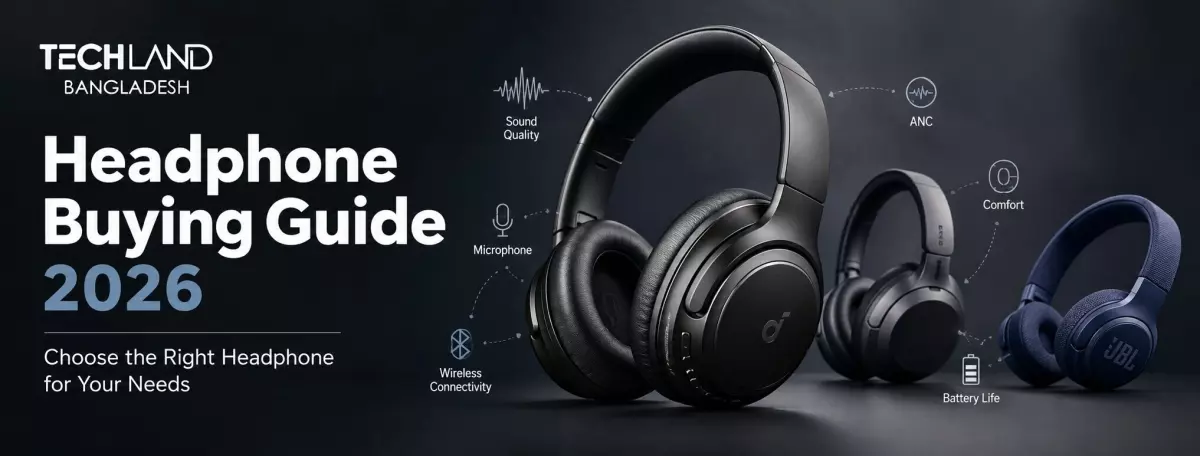
Headphone Buying Guide 2026
Headphones offer a much wider range than earbuds, from lightweight on-ear models for daily commutes to full studio headphones for hours of critical listening. There are so many types and features available in 2026; the trick to picking the right headphones is to match them to how you’ll actually use them, not just chase the highest spec numbers. Here’s everything you want to check before buying.
Over-Ear vs On-Ear
Over-ear headphones surround your ears with padded cups, which are more comfortable for long listening sessions and usually provide better isolation from outside noise. They are bulkier and less portable but are great for desk use, long flights, or anyone wanting the best comfort for prolonged listening.
On-ear headphones sit directly on your ears instead of around them. This makes them considerably more compact and lighter, better suited to commuting or carrying in a bag. The trade-off is reduced sound isolation and, for some, reduced comfort during very long sessions, since the padding sits directly on the ear rather than around it.
Open-Back vs Closed-Back Design
This is one detail many buyers miss, but it changes the listening experience quite a bit. Closed-back headphones seal your ears from outside sound, keeping your audio in and outside noise out. That makes them a practical option for commuting, the office, or any other shared space, since sound will not bleed out and be heard by others.
Open-back headphones let air and sound pass through the earcups, resulting in a more natural, spacious sound that is often preferred for critical music listening or studio work. The downside is that sound leaks both ways. If you use open-back headphones, nearby people can hear what you are listening to, and outside noise is not blocked at all, making them a poor choice for public or shared environments.
Wired vs Wireless Headphones
Wired headphones remain a good choice for people who want no connection delay, don’t want to deal with charging, or do critical listening work where audio quality can’t afford any compression from a wireless connection. This is why many studio and gaming setups are still wired.
Wireless headphones give you freedom of movement and have become the choice for most listeners for everyday use. Bluetooth audio quality has come a long way in the last few years, and newer codecs have closed much of the gap with wired listening for most casual use. You have to manage battery life, but for daily use, the convenience usually outweighs this little extra step.
Active Noise Cancellation for Headphones
ANC works better in over-ear headphones, where the larger ear cups give the noise-cancellation system more room to work with than in earbuds. This makes over-ear ANC headphones a good pick for flights, noisy offices, or commuting in heavy traffic.
ANC has its own battery life separate from the general playback number, so make sure you check that as well, as running noise cancellation uses more power and can greatly shorten the time your headphones will last on a single charge. Many models also have a transparency mode that is useful when you need to hear an announcement or have a quick conversation without removing your headphones.
Sound Quality and Driver Size
The importance of tuning is equal to that of driver size. A larger driver isn't necessarily better if the tuning is poorly balanced. Reading actual listener reviews (as opposed to just spec sheets) typically gives a better feel for how a particular model sounds in practice.
If you listen to a lot of bass-heavy music, look for headphones specifically designed to have a stronger bass response. Balanced tuning sounds more natural for vocals, podcasts, and acoustic music over long listening sessions and causes less listening fatigue.
Comfort for Long Listening Sessions
Headphones are more comfortable than earbuds because you tend to use them for longer sessions. Check the clamping force of the headphones, which is how tightly they grip your head. If they’re too tight, you’ll feel discomfort after an hour. If they’re too loose, they may slip during movement. Comfort also comes down to the ear cup padding. Long sessions are more comfortable with memory foam or velour padding than with harder synthetic leather, which can get warm and uncomfortable after prolonged use.
Weight is also a factor, particularly in over-ear models. A lighter, well-balanced pair of headphones reduces strain on your neck and head during multi-hour sessions, whether for work calls, gaming, or long listening at home.
Microphone Quality for Calls and Gaming
If you use your headphones for calls, meetings, or gaming, you should really consider the microphone quality. Some headphones also have a boom microphone that you can move closer to your mouth. This usually yields clearer audio to the person on the other side. The built-in mics on the ear cups themselves are fine for casual calls, but tend to pick up more background noise.
If you're buying this specifically for gaming, verify that the microphone has background noise reduction, as it makes a big difference in voice clarity during team calls or streaming.
Build Quality and Durability
Headphones take a lot of abuse daily, being stuffed into bags and then tossed on a desk between uses. Inspect the build materials of the headband and hinges, as these are the parts most likely to wear out or crack over time. If you tend to fold up and carry your headphones around a lot, metal-reinforced headbands are generally more durable than all-plastic designs.
Choosing the Right Headphones for Your Budget
Headphone prices in 2026 vary from budget-friendly everyday models to high-end choices designed for critical listening or professional use. While higher prices usually equate to better build quality, more refined sound tuning, and stronger ANC performance, a mid-range pair can still comfortably cover most everyday needs. First, decide what matters most to you: comfort, sound quality, or noise cancellation, and then set your budget accordingly based on those priorities.
TechLand BD has wired and wireless headphones in all kinds of budgets and styles, so it’s easier to find a pair that actually fits how you plan to use them.
FAQ
Are over-ear headphones better than on-ear for daily use?
It depends on your priorities. Over-ear headphones are generally more comfortable for long sessions and offer better sound isolation. In contrast, on-ear headphones are lighter and easier to carry, which suit commuting and daily travel better.
Does active noise cancellation work better on headphones than earbuds?
Generally yes. The larger ear cups on over-ear headphones give the ANC system more room to work, often resulting in stronger noise cancellation than earbuds in a similar price range.
Where can I buy good quality headphones in Bangladesh?
TechLand BD carries a wide range of wired and wireless headphones, with genuine products and proper warranty support. Their team can help you compare models based on your budget and how you plan to use them.
Does TechLand BD offer warranty support on headphones?
Yes, headphones purchased through TechLand BD come with proper warranty support, which is worth checking no matter which seller you're buying from.
Discussion
0Leave a Comment
No comments yet
Be the first to share your thoughts
