
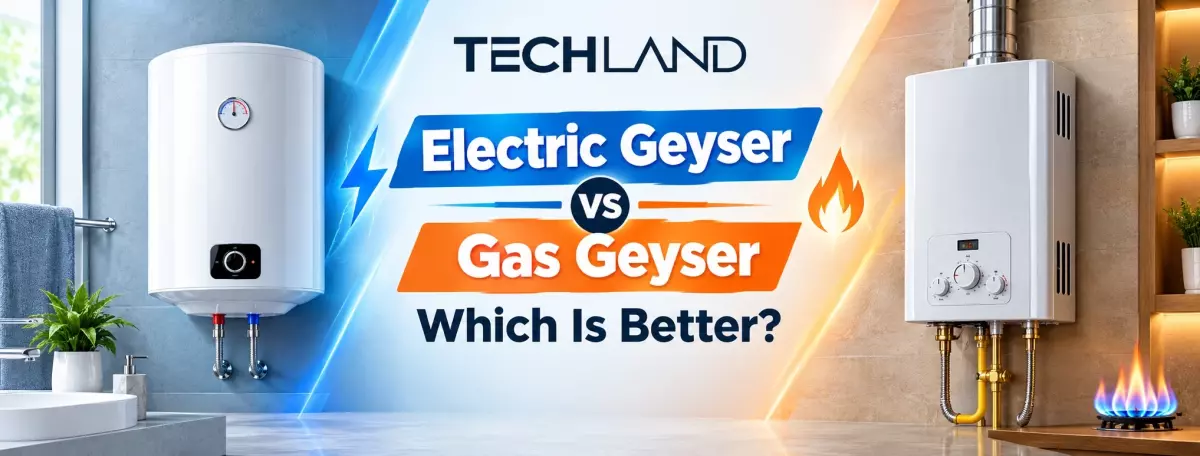
Electric Geyser vs Gas Geyser Which Is Better?
Choosing a geyser may seem simple, but the right choice can make daily bathing easier and help you manage household costs. Electric and gas geysers both heat water, but they use different energy sources and suit different homes.
For many homes in Bangladesh, an electric geyser is a practical choice because it is straightforward to use and does not need a gas line. A gas geyser can be useful when you need hot water quickly and have a safe, well-ventilated place to install it. The best option depends on your home, family size, energy supply, and safety needs.
What Is an Electric Geyser?
An electric geyser is a water heating appliance that uses electricity to heat water. Most electric geysers contain an internal heating element that transfers heat to the water stored inside a tank. When the water reaches the selected temperature, the thermostat controls the heating process to prevent unnecessary heating.
Depending on the model, an electric geyser may have additional features such as temperature control, automatic shut-off, safety protection, digital displays, and energy-saving modes. Electric geysers are available in different capacities, including small models for individual use and larger models suitable for families.
What Is a Gas Geyser?
A gas geyser uses fuel such as LPG or natural gas to heat water. Instead of an electric heating element, it uses a gas burner to produce heat. When the hot water tap is turned on, many gas geysers automatically ignite the burner and heat water as it passes through the system. This means users can often get hot water without waiting for a large tank to heat up. Gas geysers are particularly popular in locations where gas is readily available, and electricity costs are relatively high.
Electric Geyser vs Gas Geyser
Both types of geysers can provide hot water, but their operation and performance are different.
| Feature | Electric Geyser | Gas Geyser |
|---|---|---|
| Energy source | Electricity | LPG/Natural Gas |
| Heating method | Electric heating element | Gas burner |
| Heating speed | Moderate | Generally faster |
| Installation | Usually easier | Requires proper gas installation |
| Safety | Generally easier to manage | Requires careful ventilation |
| Operating cost | Depends on electricity price | Depends on gas price |
| Storage | Available in tank models | Often instant/tankless |
| Maintenance | Relatively simple | Burner and gas components need maintenance |
| Installation space | Usually moderate | Requires suitable ventilation |
| Environmental impact | Depends on electricity source | Produces combustion gases |
Heating Speed
One of the biggest differences between electric and gas geysers is heating speed. Electric storage geysers generally need some time to heat the water stored inside the tank. The exact time depends on the tank capacity, heating element power, incoming water temperature, and selected temperature.
For example, a larger electric geyser may require more time before enough hot water is available. Gas geysers, particularly instant models, can heat water quickly because the gas burner provides direct heat as water flows through the system. This can be useful for households where multiple people need hot water one after another.
Energy Efficiency
Energy efficiency is another important consideration. Electric geysers convert electrical energy into heat using a heating element. Modern models with good insulation and efficient thermostats can reduce unnecessary energy consumption.
Gas geysers directly use combustion to heat water. Depending on the model and gas type, they can provide efficient water heating, particularly for high-volume hot water requirements. However, actual efficiency depends on the specific appliance, fuel prices, water usage, insulation, and installation quality. A highly efficient electric geyser may consume less energy than an inefficient gas model, so it is important to compare the actual specifications rather than assuming that one type is always more efficient.
Operating Cost
Running cost is one of the biggest factors when selecting a geyser. Electricity prices and gas prices vary depending on location and usage. An electric geyser can increase your electricity consumption, especially if it is used frequently or kept switched on for long periods. Gas geysers can be economical for households with high hot-water demand, particularly where gas is relatively affordable.
However, a gas geyser may also require additional costs for gas cylinders, regulators, installation, ventilation, and periodic servicing. Therefore, you should calculate the estimated monthly cost based on your actual usage.
Installation
Electric geysers are generally easier to install because they primarily require a suitable electrical connection, water connection, and appropriate mounting or placement. However, electrical safety is extremely important. The installation should include proper earthing and suitable electrical protection.
Gas geysers require more careful installation. The gas supply, burner, ventilation, exhaust, water connections, and ignition system must all be installed correctly. Improper installation of a gas appliance can create serious safety risks.
Safety
Safety should be one of the first considerations when choosing a water heater. Electric geysers do not produce combustion gases inside the room. Modern models may include features such as automatic temperature control, thermal cut-off, pressure protection, and electrical safety systems.
However, faulty wiring, poor earthing, damaged heating elements, or incorrect installation can create electrical hazards. Gas geysers have additional safety considerations because they burn fuel. A poorly installed or improperly ventilated gas geyser can lead to carbon monoxide accumulation or other dangerous conditions. Gas appliances should therefore be installed in properly ventilated areas and inspected regularly.
Maintenance Requirements
Both electric and gas geysers require regular maintenance. Electric geysers may need cleaning to remove mineral deposits and sediment from the tank. The heating element, thermostat, pressure valve, and electrical connections should also be checked periodically.
Gas geysers have additional components such as burners, gas valves, ignition systems, and exhaust paths. These components may require professional inspection and cleaning. If the gas burner becomes dirty, the appliance may not operate efficiently and could produce abnormal combustion.
Hot Water Availability
Electric geysers are available as both storage and instant models, although storage models are common for household use. A storage geyser keeps a certain quantity of water inside a tank. Once the hot water is used, the appliance needs to heat additional water.
Gas instant geysers can provide hot water continuously as long as the gas supply and water supply are available. For large families with high hot-water demand, continuous heating can be a significant advantage.
Space Requirements
Space is another factor, especially for apartments and smaller bathrooms. Electric storage geysers require enough space for the tank and safe installation. Larger-capacity models naturally require more space.
Gas geysers can be compact, particularly instant models, but they need adequate ventilation and appropriate installation space. A compact gas geyser should never be installed in an enclosed area simply because it takes up less physical space.
Which Geyser Is Better for a Family?
There is no universal answer because every family has different requirements. For a small family that primarily needs hot water for bathing and routine household use, an electric geyser can be a convenient option. It is relatively simple to operate and can be installed in many residential settings.
For a larger family with frequent hot-water usage, a gas geyser may offer greater convenience because it can provide hot water quickly and continuously. Before purchasing, consider how many people will use the geyser and how frequently it will operate.
Advantages of Electric Geysers
Electric geysers are easy to operate and are available in many sizes. They can be suitable for both small homes and larger households. They do not require gas combustion or a gas exhaust system. Many modern models also include temperature control and different safety features. For apartments and homes with a reliable electricity supply, an electric geyser can be a simple solution for regular hot water use.
Disadvantages of Electric Geysers
Electric geysers increase electricity consumption, especially when used frequently. Storage models also need time to heat water. Larger tanks can take up more space, and mineral deposits may build up inside the tank or around the heating element. Their operation also depends on the availability of electricity. During a power cut, an electric geyser cannot heat new water.
Advantages of Gas Geysers
Gas geysers can heat water quickly, especially instant models. They can also provide continuous hot water while the gas and water supplies are available. This can make them useful for larger families or households with high hot water demand. Some models are also compact compared with large storage water heaters.
Disadvantages of Gas Geysers
Gas geysers need proper installation and ventilation. They also require a reliable LPG or natural gas supply. The burner, gas connection, ignition system, and heat exchanger may require regular inspection and cleaning. Poor installation or poor ventilation can create serious safety risks. For this reason, gas appliances should be installed and serviced by qualified professionals.
Electric Geyser vs Gas Geyser Which One Should You Choose?
An electric geyser can be a good choice if you want simple operation, easier installation, and a water heater that does not use gas combustion. A gas geyser may be a better fit if you need fast, continuous hot water and have a safe gas supply with proper ventilation.
Before buying, think about your family size, daily water use, electricity supply, gas availability, installation space, and maintenance requirements. The right geyser is the one that fits your home and can be installed and used safely.
Frequently Asked Questions
Which geyser is cheaper to run, electric or gas?
It depends on local rates. In many places, gas is cheaper for heavy use. Check current electricity and LPG prices in your city.
Is a gas geyser safe for bathroom use?
Yes, if the bathroom has good ventilation and an exhaust. Never use a gas geyser in a completely closed room.
How long does an electric geyser take to heat water?
Storage models usually take 15 to 40 minutes depending on capacity and power. Instant electric models heat faster but need higher wattage.
Can I install a gas geyser myself?
It is better to call a trained technician. Wrong installation can cause gas leaks or incomplete burning.
Which geyser is better for hard water?
Both suffer from scaling. Electric storage tanks collect more scale. Gas models with copper heat exchangers also need regular cleaning. A water softener helps both.
Do electric geysers work during power cuts?
No. You need electricity. Gas geysers continue to work if gas is available.
Discussion
0Leave a Comment
No comments yet
Be the first to share your thoughts
