
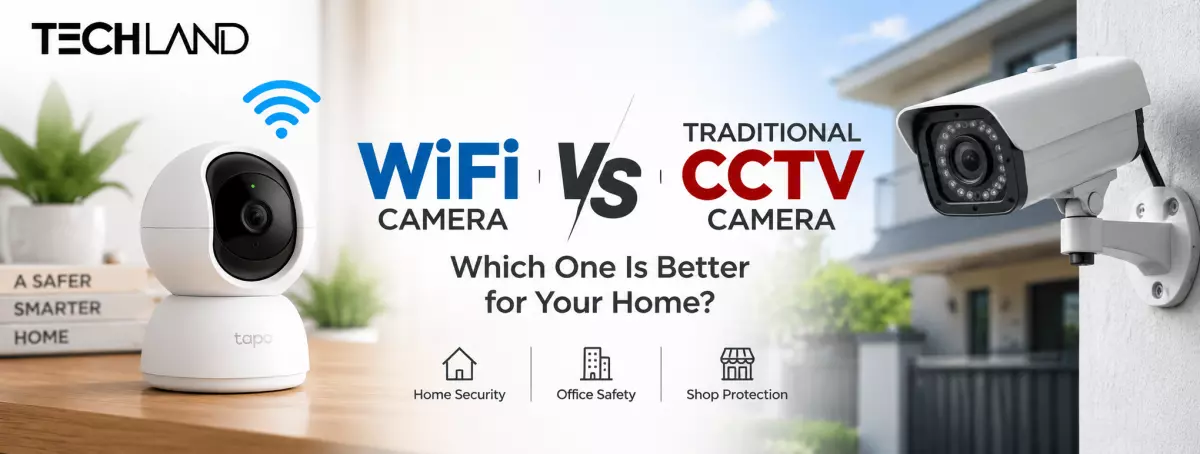
Difference Between a wifi Camera and a Traditional CCTV Camera
Security cameras have become an important part of home and business security. Whether you want to keep an eye on your front door, a shop, or an office, choosing the right type of security camera can make a huge difference. There are two common options. Wifi cameras and traditional CCTV cameras. Both are designed for surveillance, but they differ in connectivity, footage storage, and how owners can check in on their property.
So, when deciding between a wifi camera and a traditional CCTV Camera, which one is better? The answer depends on your property, installation requirements, recording needs, internet connection, and how much convenience you want from your security system.
What Is a Traditional CCTV Camera?
A traditional CCTV camera is a wired surveillance camera, usually connected to a Digital Video Recorder (DVR) or Network Video Recorder (NVR). Depending on the system, cameras can use coaxial or Ethernet cabling to send video back to the recording device. Video is usually stored locally on a hard drive that is connected to the DVR or NVR.
Traditional CCTV systems are widely used in homes, shops, offices, banks, warehouses, and other properties because they offer continuous, centralized video recording. The system does not rely on wifi to transmit video between the cameras and recording equipment because the camera-to-recorder connection is wired. If you are a user who needs a dedicated surveillance system with multiple cameras and centralised recording, looking at a CCTV Camera collection can be a practical starting point.
What Is a Wifi Camera?
A wifi camera is a type of security camera that connects to a wireless network, allowing it to communicate with a router and, depending on the model, provide remote access via a smartphone or other connected device. Today's wifi cameras come with features such as motion detection, night vision, two-way audio, mobile notifications, and local memory-card recording. Some models also support smart-home or cloud-based storage.
Flexibility is one of the biggest advantages of a wifi camera. It can be a useful option if you don't want to run extensive video cabling through walls or ceilings. That said, wifi cameras aren't necessarily 100% cable-free; most models still require a power connection. If you are looking for a small-scale surveillance solution for a home or small office, you can browse the wifi camera collection and compare models based on resolution, storage support, night vision, and smart features.
What Is the Difference Between a wifi Camera and a Traditional CCTV Camera?
The main difference between these two types of cameras is the way they communicate with the rest of the surveillance system. Traditional CCTV cameras usually connect to a DVR or NVR via a wired connection, while wifi cameras communicate over a wireless network.
This difference impacts installation, flexibility, storage, remote monitoring, and system design. Wired CCTV systems usually require more planning because you have to run cables between the cameras and the recording equipment. Often, you can place a wifi camera where running dedicated video cables would be difficult.
However, easier installation doesn't automatically mean better wifi cameras. A more robust option for multiple cameras, centralised recording, and a permanent surveillance installation is a traditional CCTV system.
Installation and Setup
One place where wifi cameras definitely win out for smaller setups is installation. A typical wifi camera needs a power source and a connection to the right wireless network. Once the Camera is set up using the manufacturer's app, users can typically access it from a smartphone.
A conventional CCTV installation can involve a lot more hands-on work. Cameras need to connect to the DVR or NVR, and cables may need to run through walls, ceilings, or other areas of the property. A multi-camera system may require professional installation to ensure proper cable management and camera positioning.
Wifi cameras are a convenient option for an apartment or small home that needs only a few cameras. A wired CCTV system is more structured and is better suited for larger properties where permanent cabling is acceptable.
Does a wifi Camera Need an Internet Connection?
This is one of the most important things to ask before buying a wifi camera. A wifi camera uses a wireless network to communicate. The internet-free features depend on the camera model. Some cameras continue recording locally to a supported memory card if the internet connection is temporarily lost. However, features such as remote viewing, cloud recording, and some notification services may require internet access.
Traditional CCTV systems can do basic local recording with a DVR or NVR without an internet connection. If you want remote monitoring, you can add internet access later. This means users with an unstable internet connection should carefully check a wifi camera's specifications before buying.
Storage and Recording
Storage is another important difference between wifi cameras and traditional CCTV systems. Many wifi cameras support microSD cards for local recording. This can be convenient for a home user who only needs to store footage from one or a few cameras. Some models may also offer cloud storage, depending on the manufacturer and service.
Traditional CCTV systems generally use a DVR or NVR with a hard drive to store recordings from multiple cameras. This makes them well-suited for users who need centralised recording and longer-term footage storage.
The required storage depends on camera resolution, the number of cameras, the recording schedule, frame rate, compression technology, and how long you want to retain footage. For a complete surveillance setup, choosing the right storage solution is just as important as choosing the Camera itself.
Remote Monitoring
One of the biggest advantages of modern wifi cameras is remote monitoring. Many models also let users view live footage from outside the home through a smartphone app, as long as the Camera and network have the necessary internet connectivity.
Some wifi cameras also send motion alerts to a smartphone, so users can react when activity is detected. Features such as two-way audio can also let you talk through the Camera.
Older CCTV systems can also support remote monitoring, but this usually depends on the DVR or NVR, network setup, and the software or application provided by the manufacturer. So remote access is possible with either system, but wifi cameras often make smaller installations easier.
Image Quality and Night Vision
There is no easy rule that says wifi cameras will give you a better image than traditional CCTV cameras, or vice versa. You can get both types with different resolutions, sensors, lenses, and image-processing technologies.
When comparing security cameras, resolution matters, but it shouldn't be the only consideration. The quality of the recorded footage can also be affected by night vision performance, field of view, sensor quality, low-light performance, frame rate, and lens characteristics.
Another important factor is weather resistance for outdoor installation. If you plan to use the Camera outdoors, check that it has the right protection rating for the environment it will be used in.
Which Camera Is Better for a Home?
A wifi camera can be a convenient choice for many small homes and apartments, since it allows relatively simple installation and easy monitoring with a smartphone. This can be especially useful if you only want to keep an eye on a few vital areas such as the entryway, living room, garage or kids' room.
In a big house where you need several cameras and centralised recording matters, a traditional CCTV system can make more sense. It's a better choice if you don't mind permanent cable installation. So the better choice has less to do with the technology and more to do with the kind of security coverage your home really needs.
Which Camera Is Better for a Shop or Office?
For shops and offices, the result may be somewhat different. If you don't need a complicated multi-camera setup but still want to monitor your business remotely and easily, wifi cameras can be a great option for small shops.
Traditional CCTV can be more practical for a larger commercial property, where multiple cameras connect to a centralised DVR or NVR. This makes it easier to deal with recordings from different parts of the property.
For instance, a business may require constant surveillance around entrances, cash counters, storage areas, parking spaces, and other significant locations. A wired CCTV system, when properly planned, can provide a reliable solution for this type of environment.
Which One Is More Reliable?
Reliability depends on the quality of the equipment, installation, network, power supply, and overall system design. Traditional CCTV has the advantage of a wired connection between the Camera and recorder, which can be useful in locations where wifi is patchy or weak. Wifi cameras, in contrast, depend more on wireless network quality for communication.
If the wifi camera is too far from the router, or if thick walls and heavy interference reduce the signal between the Camera and router, connectivity may be less stable. In those cases, better wireless coverage with the right wifi router or network setup could help. If you already have a strong, reliable wifi network, a wifi camera can work very well for home monitoring.
Which One Should You Choose?
The choice between a wifi camera and a traditional CCTV camera boils down to your security needs. If you want an easy installation, flexible placement, smartphone access, and modern monitoring features, a wifi camera can be an excellent choice. It's great for apartments, small homes and smaller offices that only need a few cameras.
If you need multiple cameras, centralised recording, large local storage, and a permanent surveillance system, traditional CCTV might be the better choice. It is also great for shops, offices, warehouses, larger houses, and any other place where you need to monitor more than one area at a time.
In some cases, it may also make sense to use both technologies. A property can use a traditional CCTV system for main surveillance and supplement it with a wifi camera in an area where flexible monitoring helps.
Frequently Asked Questions
Can a wifi camera completely replace a traditional CCTV system?
It can replace a traditional CCTV setup in some small homes or offices, but it is not ideal for every situation. Larger properties that require many cameras and centralised recording may still benefit from a traditional CCTV system.
Can a wifi camera record without the internet?
Some wifi cameras can record locally to a supported memory card even without internet access. However, remote monitoring and certain cloud-based features may require an internet connection.
Are wifi cameras secure?
Security depends on the Camera, application, network configuration, and account security. Strong passwords, updated firmware, and a properly secured wifi network can help protect the system.
Which is better for a small home?
For a small home that needs only a few cameras and convenient smartphone monitoring, a wifi camera is often a practical choice. A traditional CCTV system may be better if centralised recording and permanent wiring matter more.
Which is better for a business?
The answer depends on the business's size and requirements. Small offices and shops may benefit from wifi cameras, while larger businesses may prefer traditional CCTV for its centralised recording and multi-camera capabilities.
Discussion
0Leave a Comment
No comments yet
Be the first to share your thoughts
