
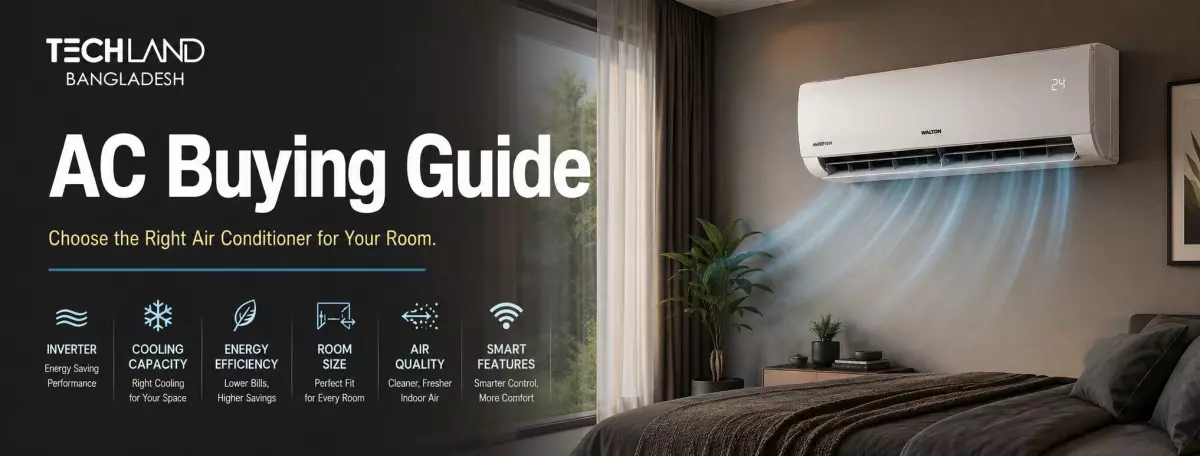
AC Buying Guide: How to Choose the Best Air Conditioner
When summer temperatures often climb above 35 degrees Celsius, an air conditioner is one of the most important home appliances and offices in Bangladesh. There are so many brands, types and technical terms out there that choosing the right AC can be confusing. This guide covers everything you need to know before you buy.
Why Would You Need an AC
Bangladesh's summer heat isn't just uncomfortable, it can genuinely affect sleep, work and daily life for weeks at a stretch. A fan or air cooler helps a bit but once the temperature and humidity both rise, only an AC actively pulls heat and moisture out of a room instead of just moving the air around.
This is the same principle on which a refrigerator works . An AC works on the same basic principle . The chemical refrigerant pulls heat from inside the room and carries it out to the outdoor unit, where it is released. This cycle goes on continuously until the room is gradually cooled to a comfortable level. Over the years, modern ACs have also acquired smart features such as humidity control and Wi-Fi connectivity that enable you to monitor and adjust settings remotely from a phone.
Air Conditioner Types
Basically there are two types of air conditioners, they are window AC and split AC. A window AC is a single box which contains the compressor, condenser and cooling elements . It is typically mounted in a hole in a window or wall. A split AC divides this into two parts . An indoor unit that cools the room silently, and an outdoor unit that deals with heat exchange . In recent years, Split ACs are the more popular option thanks to their quieter operation, better efficiency and cleaner look on a wall. There are a few specific setups within split ACs which are worth knowing.
Multi-Zone Split
A multi-zone split system connects more than one indoor unit to one outdoor unit. This means you can cool multiple rooms without having to install a separate outdoor condenser for each, making it a more cost-effective option for larger homes with multiple bedrooms.
Cassette AC
Cassette AC units are installed in the ceiling and are a common sight in offices, restaurants and retail shops. They are great for cooling down larger spaces as the air is blown out in multiple directions at the same time. If the building already possesses a duct system, then cassette units can be connected to this ductwork for centralised cooling over a larger area. For this reason, they are often used in places like shopping malls and conference halls.
Floor Standing AC
The one exception to the modern units is a floor standing AC that still functions as a single self contained unit. It’s portable and can often be found on caster wheels to easily be moved. It provides quick cooling to a specific area. This makes it a practical choice for places where a permanent wall-mounted unit isn't a good fit.
Tonnage
The tonnage of the AC which refers to the cooling capacity of the AC is one of the first things to get right when buying an AC. A tonne is defined as the cooling power necessary to melt one tonne of ice in one day. Air conditioners come in a range of sizes, usually between 1 tonne and around 5 tonnes, depending on the model and the space they’re meant to cool.
Matching tonnage to your room size is more important than people realise. For a room that is less than about 130 square feet, a 1 tonne AC is usually enough. Usually a 1.5 tonne unit is necessary to cool a room of about 185 Sq. ft. properly. Larger areas such as a hall or conference room generally need 2 to 5 tonnes according to size. An oversized unit will cool quickly but waste energy. An undersized unit will be working constantly to keep up and will wear out faster.
Aluminum Coil or Copper Coil
Inside an AC, there’s a compressor unit that uses coils to transfer heat and manufacturers generally opt for either copper or aluminium for this. Aluminium coils reduce the cost of the AC but don’t last as long and are prone to deterioration and corrosion over time. Copper coils are more expensive to install, but conduct heat more efficiently and are much more resistant to corrosion – giving the unit a longer working life overall.
Efficiency and Energy Rating
One of the biggest factors in how much an AC really costs you in the long run (besides the sticker price) is energy efficiency. Each AC has an energy rating, typically on a star scale, that indicates how much cooling it provides for the amount of electricity it consumes. A 5 star rated AC can save electricity by a meaningful amount over a lower rated unit though 5 star models tend to cost more to buy upfront. In general, a unit with high energy ratings will pay for itself over time by saving you money on your monthly bills, especially if the unit runs many hours each day.
Non-Inverter AC or Inverter AC
This is one of the more significant technical distinctions to understand. In a non-inverter AC, the compressor is simply turned on and off to try to maintain the set temperature, and each time it restarts it draws a surge of power. However, an inverter AC runs the compressor all the time, only changing the speed dynamically once the room reaches the desired temperature rather than shutting it off completely.
Not only do Inverter ACs consume significantly less power over time, but also the compressor does not keep powering up from a stop, compared to non-inverter ACs (including those with the same star rating). The purchase price of inverter units is higher, but the electricity savings over time generally make up for the higher price after a few years of regular use.
Other Features to Consider Before the Final Purchase
In addition to the basic decisions of type, tonnage, coil material and inverter technology there are a few more features that you might want to look at before you buy.
Filters
The built-in filters trap airborne particles like dust, pollen and bacteria before they travel around the room. This becomes more significant for households with allergy sensitivities or young children. Different ACs utilise different types of filters – anti-bacterial filters or standard dust filters.
Heaters
Many of the present models of ACs have a built in heating mode so that the same unit can be a room heater in the cooler months just by switching the mode. This is useful for anyone who needs both functions from a single appliance.
Auto Clean Function
An auto-clean function also helps to prevent the buildup of mould and bacteria inside the unit, which can affect air quality and cooling performance over time. Some models do this by blowing a short burst of air through the internal filter periodically to keep it drier and cleaner between full services.
Dehumidifier
The dehumidifier function draws out excess moisture from the air while cooling, which is a big deal during the humid monsoon season in Bangladesh. Humidity can make a room feel sticky and uncomfortable even at a reasonable temperature and reducing the moisture also helps limit the growth of bacteria in the space.
Advanced Features
Some AC models have bells and whistles such as adjustable timers, auto-sensing modes, humidity and temperature adjustment, Wi-Fi connectivity and remote app control. None of these are necessary for basic cooling, but they do provide real convenience if you’re deciding between a couple models that are similar in price.
Maintenance Tips
A good AC is still going to need some maintenance to keep running smoothly for years. Regularly cleaning or replacing filters every few months keeps airflow strong and prevents the unit from working harder than necessary. Regularly checking the outdoor unit for dust buildup and refrigerant levels can help identify small problems before they become costly repairs. Having your AC at a moderate, consistent temperature also reduces the strain on the compressor over its lifetime, rather than constantly switching it on and off.
Buy From the Most Trusted Shop in Bangladesh TechLand BD
Once you have worked out the type, tonnage and features that suit your space, the next step is to buy from a source you can trust for genuine products and proper after-sales support. TechLand BD has a large variety of air conditioners with different types, tonnage options and budget options with proper warranty support. Whether it’s a bedroom, living room or larger commercial space their team can help you match a model to your room size and daily needs.
FAQ
Is a split AC better than a window AC?
For most homes, yes. Split ACs run quieter and more efficiently since the compressor sits outside the room, though they cost more to install. Window ACs remain a reasonable choice for smaller budgets or spaces where outdoor installation isn't practical.
How do I know what tonnage AC I need for my room?
Match the tonnage to your room's square footage. A 1 ton AC suits smaller rooms under about 130 square feet, while 1.5 tons handles rooms closer to 185 square feet. Larger spaces need 2 tons or more for effective cooling.
Where can I buy a good quality AC in Bangladesh?
TechLand BD carries a wide range of air conditioners, including window and split types across different tonnage options and budgets, with genuine products and proper warranty support. Their team can help you match a model to your room size and needs.
Does TechLand BD offer warranty support on air conditioners?
Yes, air conditioners purchased through TechLand BD come with proper warranty support, which is worth checking no matter which seller you're buying from.
Discussion
0Leave a Comment
No comments yet
Be the first to share your thoughts
